Landscape Design Certificate Capstone
Designed a usability-focused residential landscape as a capstone project for the Emory University Landscape Design Certificate, incorporating primarily native plantings to support sustainable, functional outdoor living in the Northeast.
-
Limited property size restricted additions like a carport
Inefficient access and circulation to the home
Drainage issues along the fence line
Lack of defined outdoor living, storage, and pet zones
Desire for native planting, wildlife support, and food production
-
User-centered planning: Designed around daily routines—parking, unloading, grilling, pet use, and maintenance
Circulation & flow: Prioritized clear, intuitive paths from parking to entry and between outdoor zones
Comfort & usability: Reduced friction points like weather exposure, bugs, and carrying equipment
Sightline design: Maintained clean, intentional views across porch, patio, and yard
Habitat integration: Balanced human use with dedicated spaces for wildlife
Low-maintenance strategy: Integrated durable materials and native planting for long-term ease
-
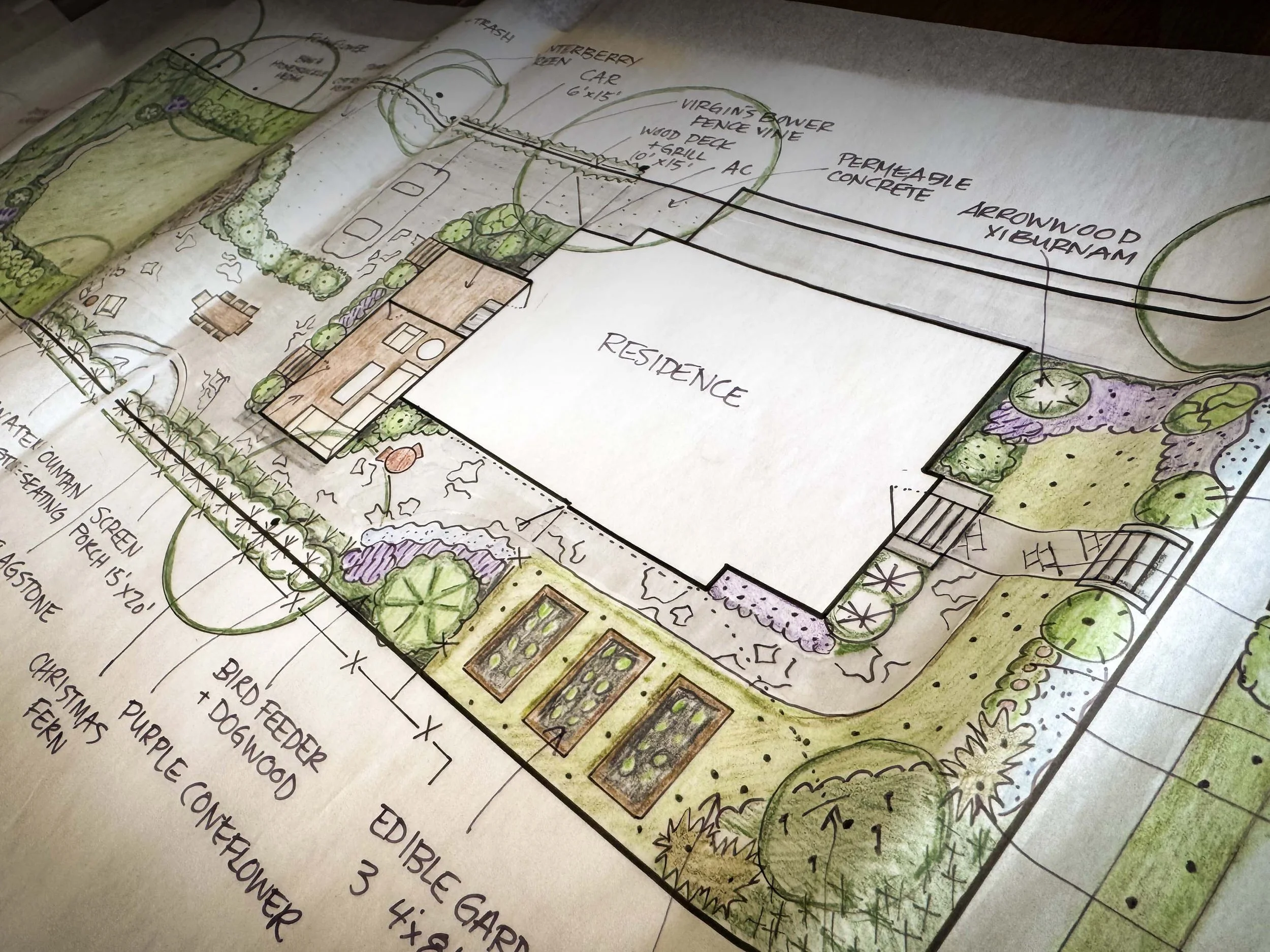
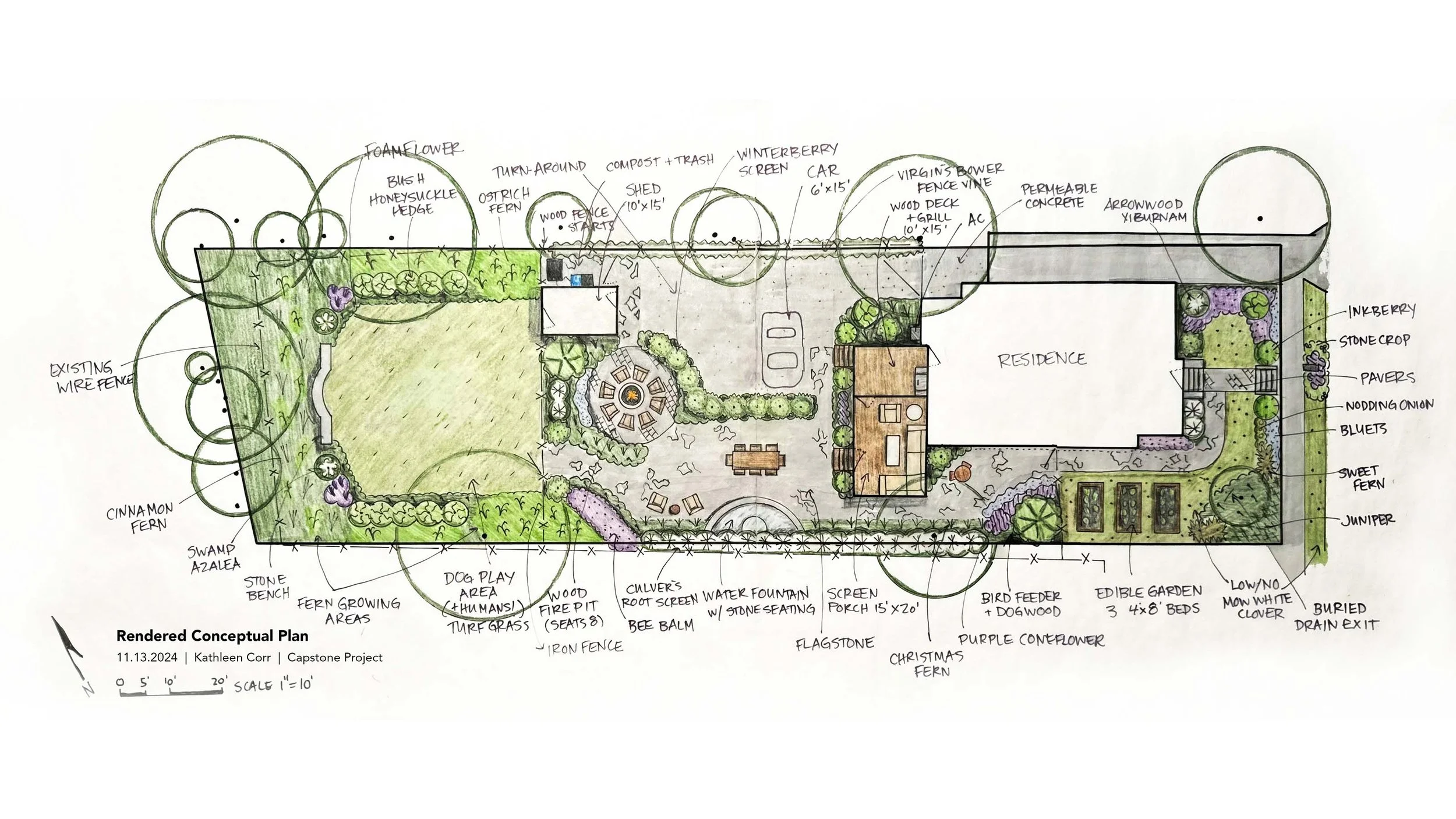
Improved parking & access: Added a permeable concrete turnaround for easy entry, exit, and maneuvering
Seamless entry experience: Relocated gate and created a direct, protected path from car to front door
Bug-free outdoor living: Designed a screened porch for comfortable lounging and dining without insects
Convenient grilling: Positioned the deck for easy access from the kitchen while keeping it out of main traffic flow
Functional outdoor zones: Organized porch, deck, and fire pit patio into distinct but connected areas
Accessible storage: Added a shed for yard tools, trash/compost, and firewood near key use areas
Pet-friendly design: Included a separate, fenced dog area to protect planting zones
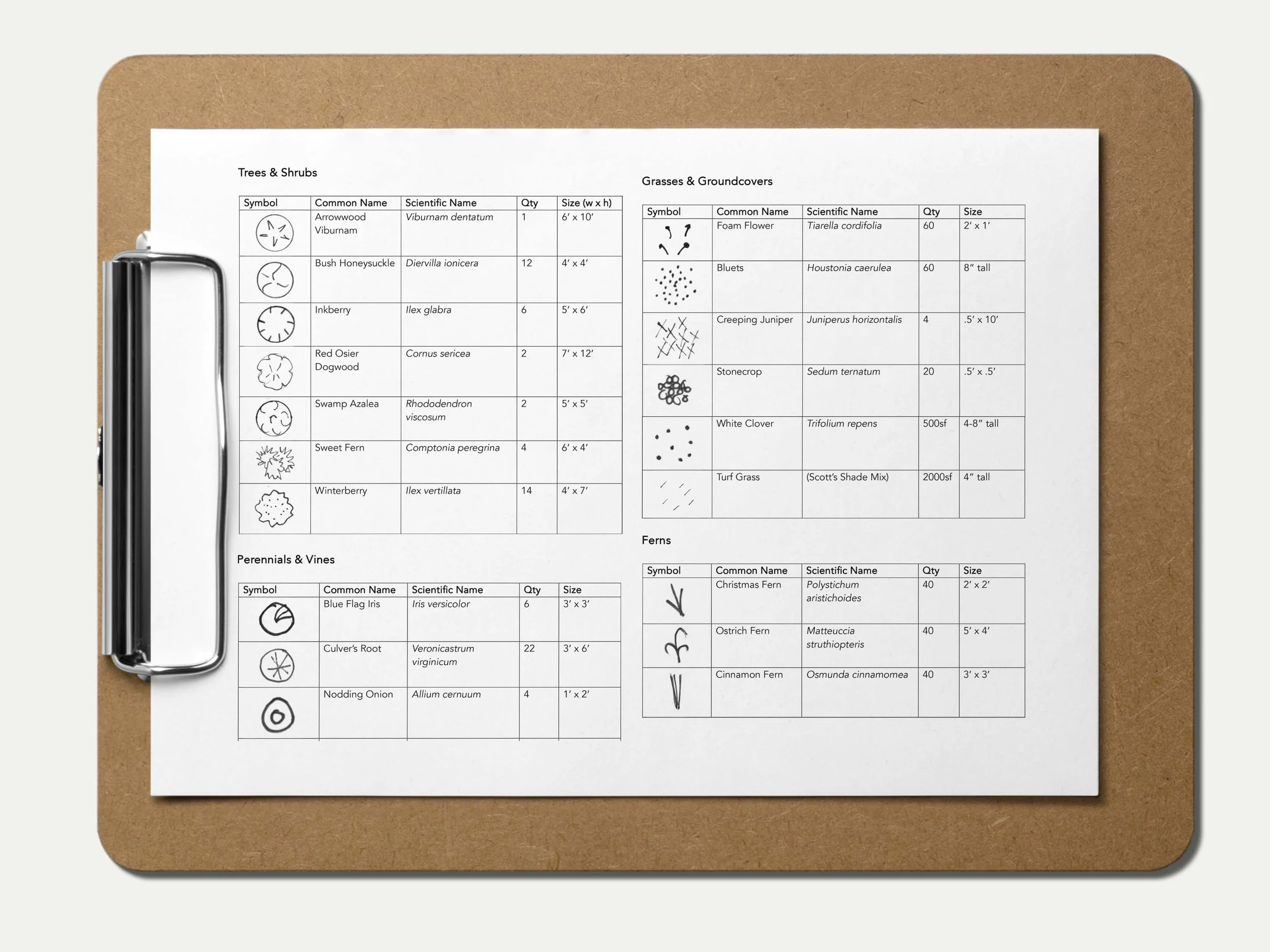
Native planting: Used winterberry, dogwood, Culver’s root, Christmas ferns, and Virgin’s Bower for structure, privacy, and habitat
Wildlife features: Integrated a bird feeder, water feature, and views to bird-supporting plantings from key seating areas
Dedicated habitat zones: Preserved unmaintained areas outside the fence to support wildlife and natural growth cycles
Edible + low-maintenance front yard: Expanded garden beds and replaced turf with white clover
Drainage solution: Installed a buried system to redirect downspout runoff
-
Effortless daily use: Smooth transitions from car to home, kitchen to grill, and storage to yard work
Comfortable outdoor living: Screened porch and defined zones allow use in more conditions with fewer interruptions
Time-saving design: Reduced hauling, mowing, and maintenance through smart placement and materials
Multi-season functionality: Fire pit and porch extend usability throughout the year
Enhanced habitat: Supports birds, pollinators, and wildlife through native planting and dedicated natural areas
Cohesive experience: Functional decisions drive a clean, unified design
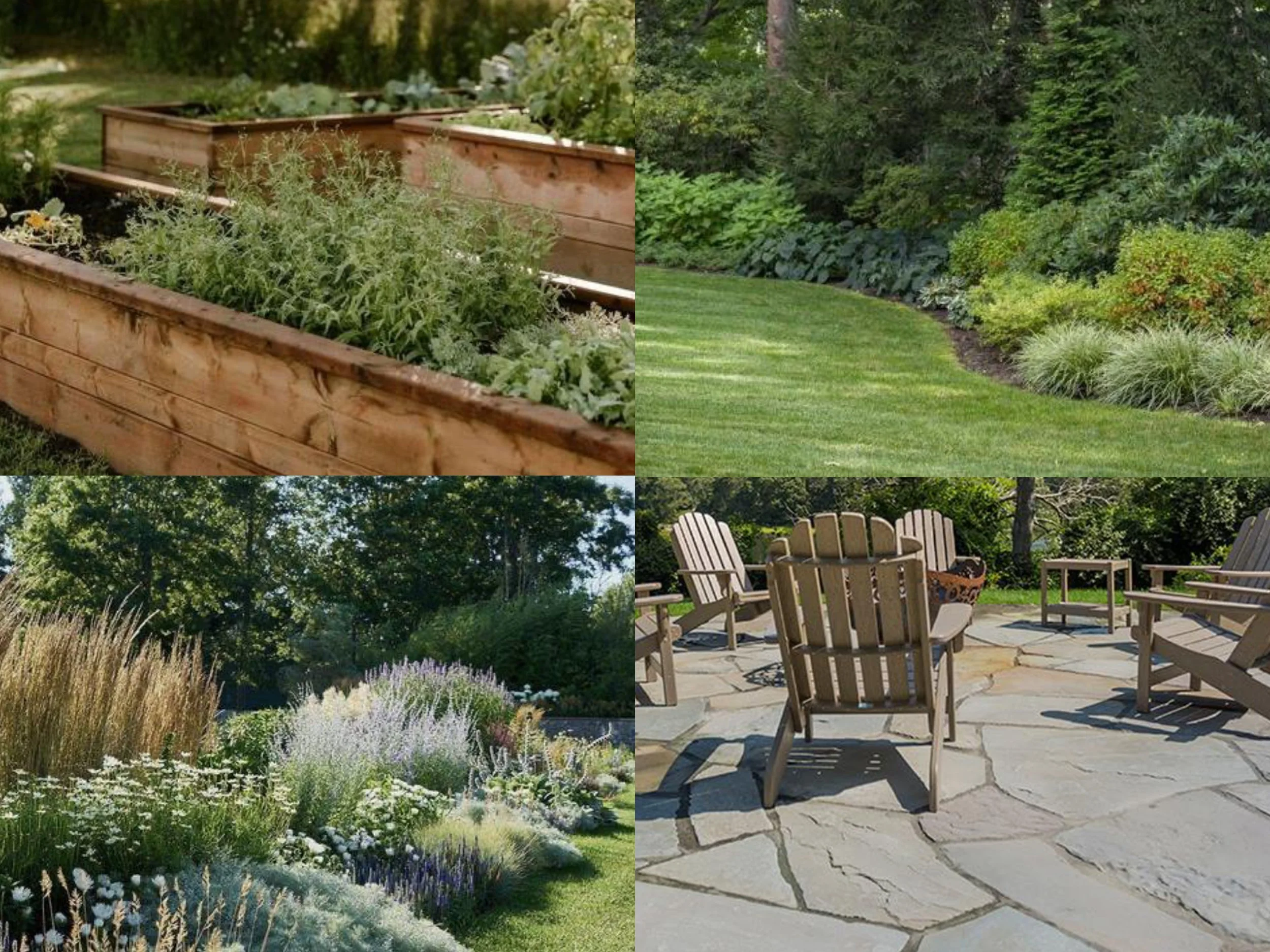
Mood Board
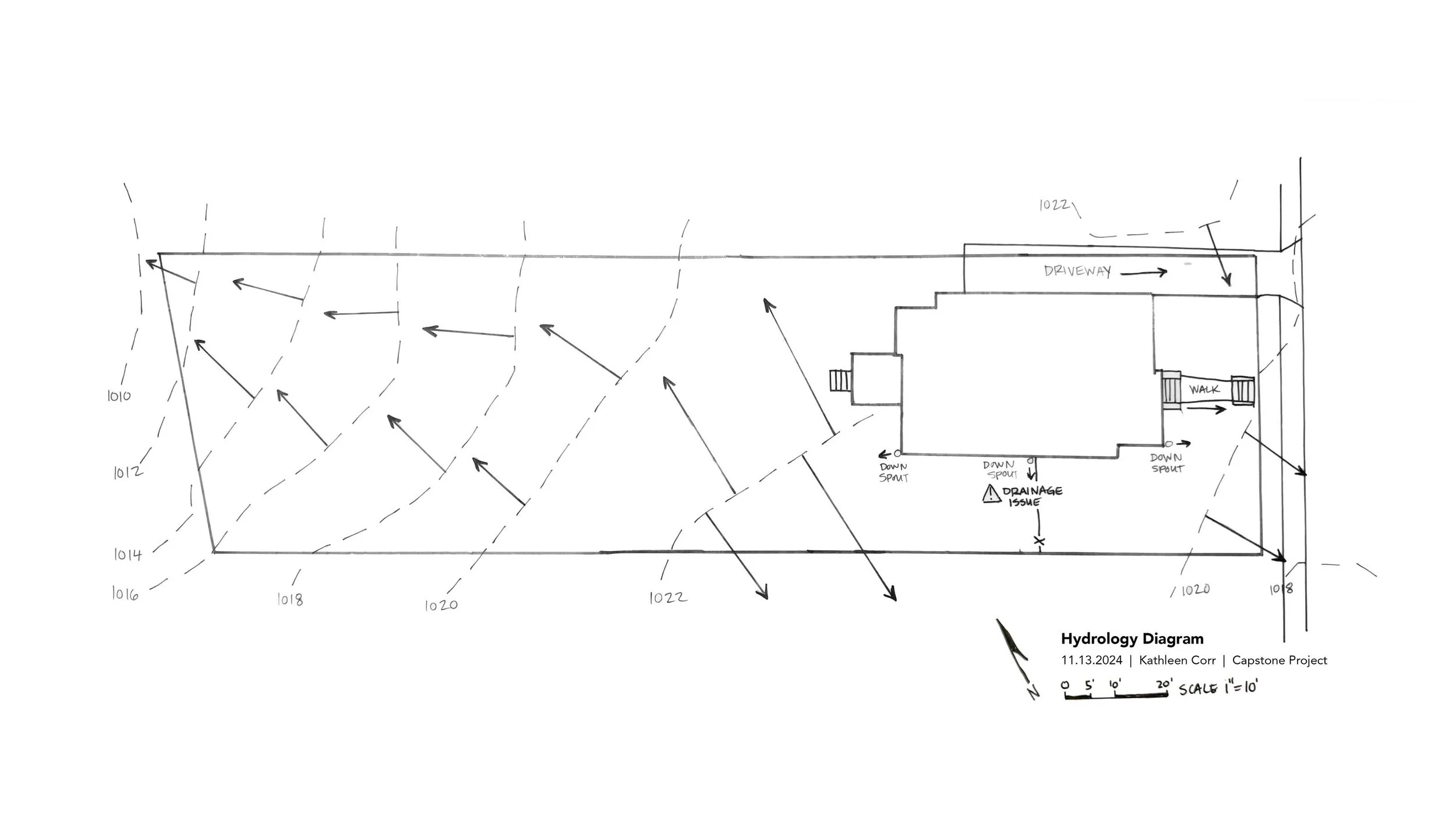
Hydrology Diagram
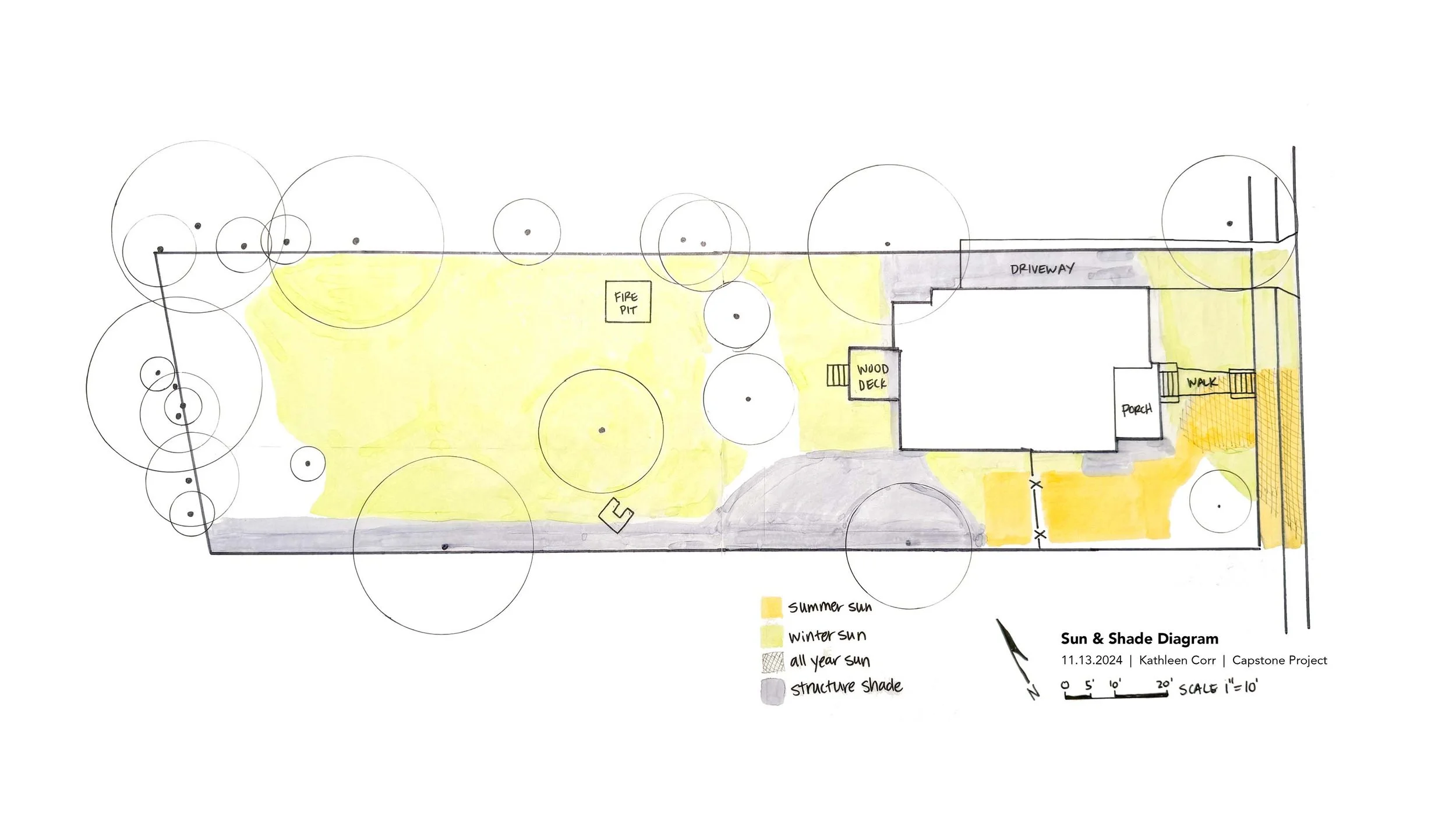
Sun & Shade Diagram
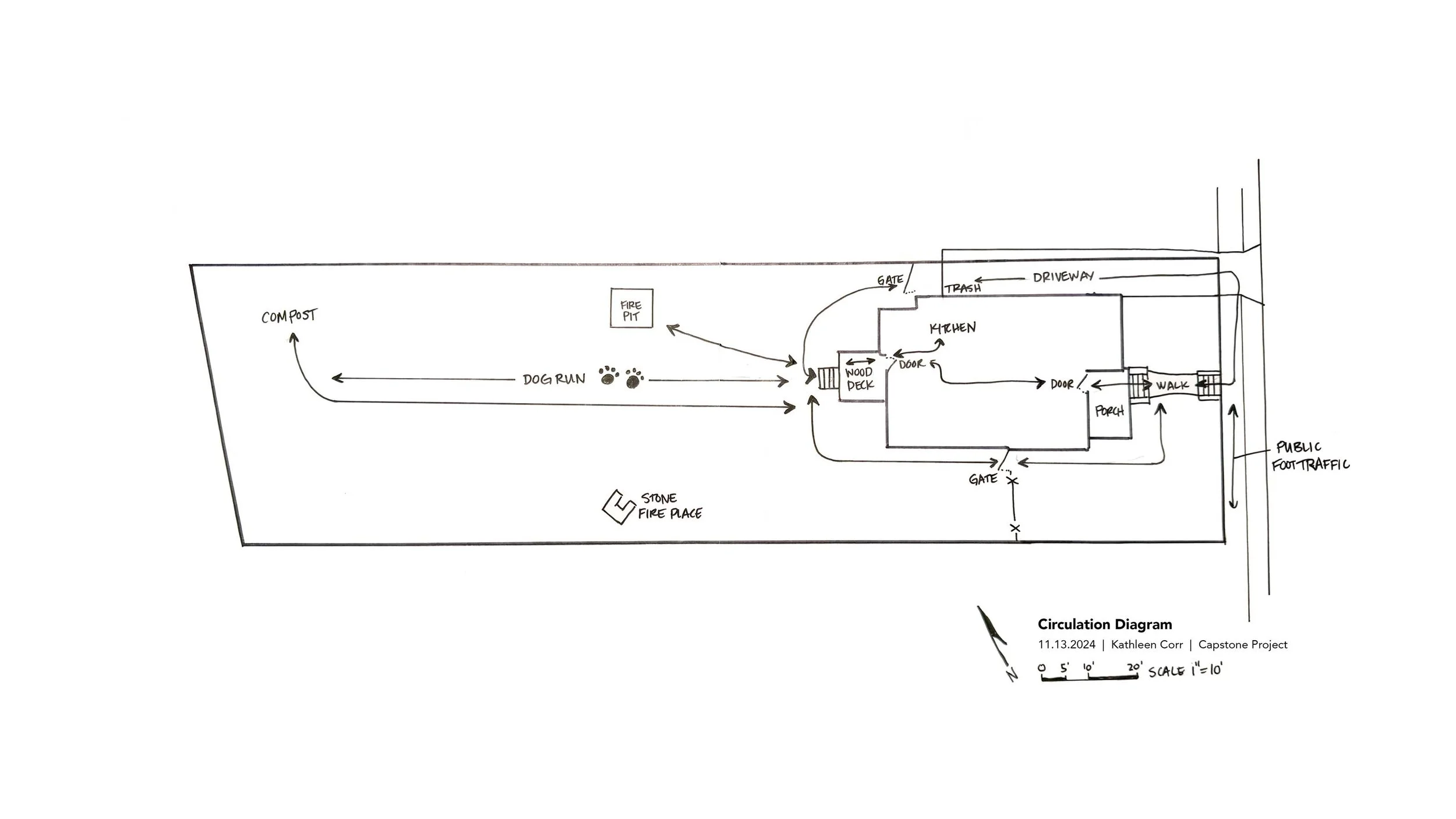
Circulation Diagram
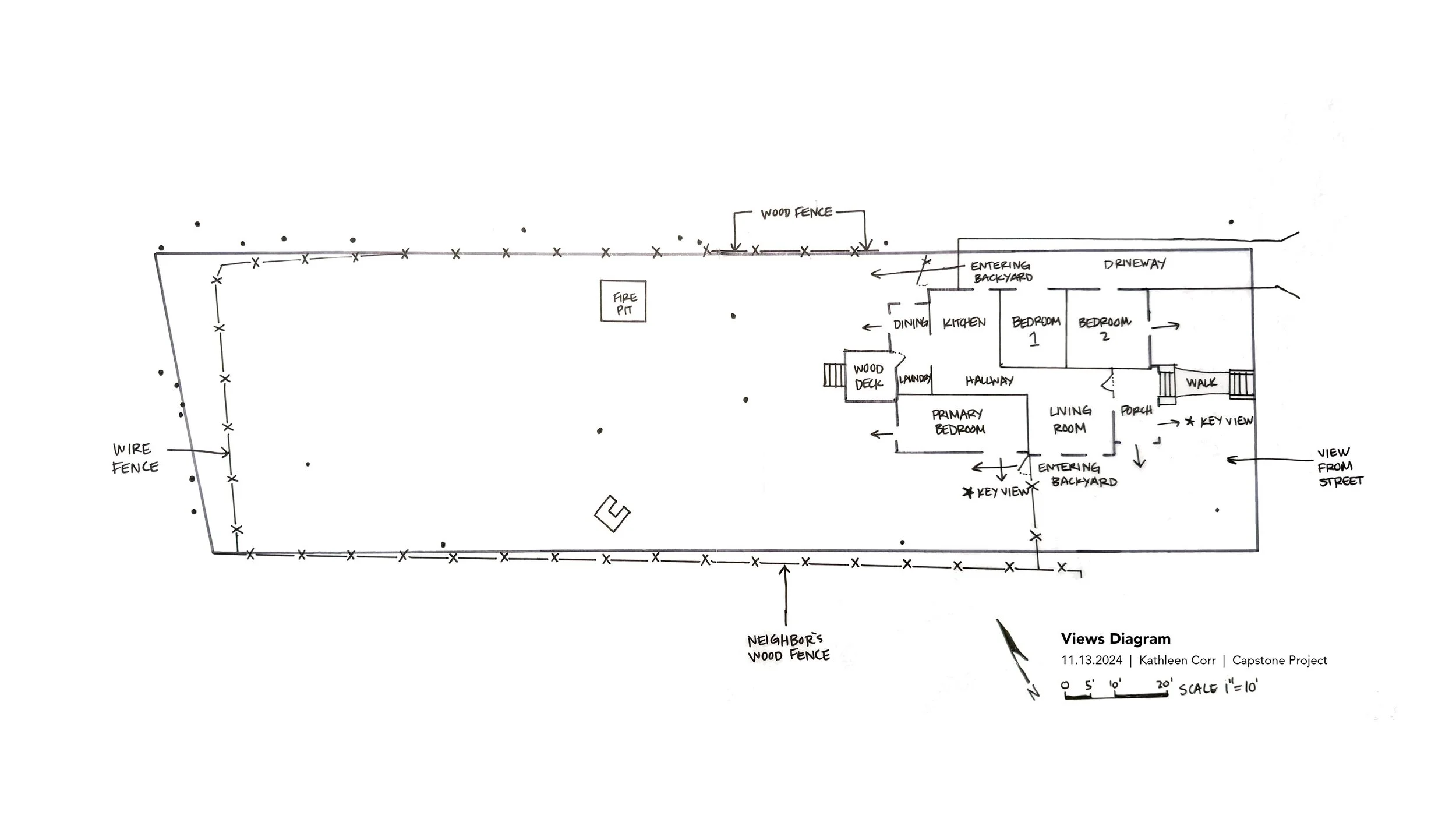
Views Diagram
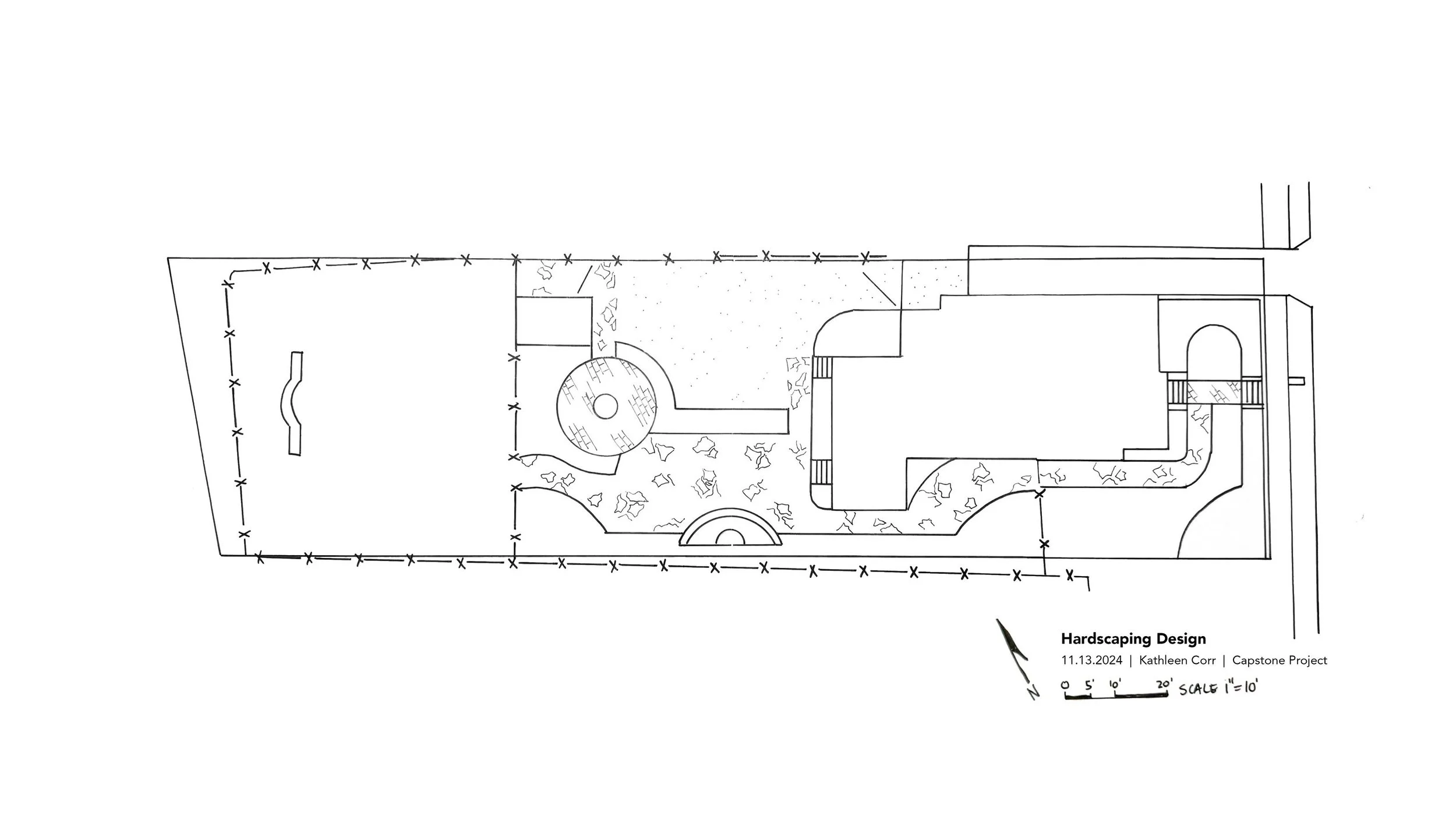
Hardscaping Design
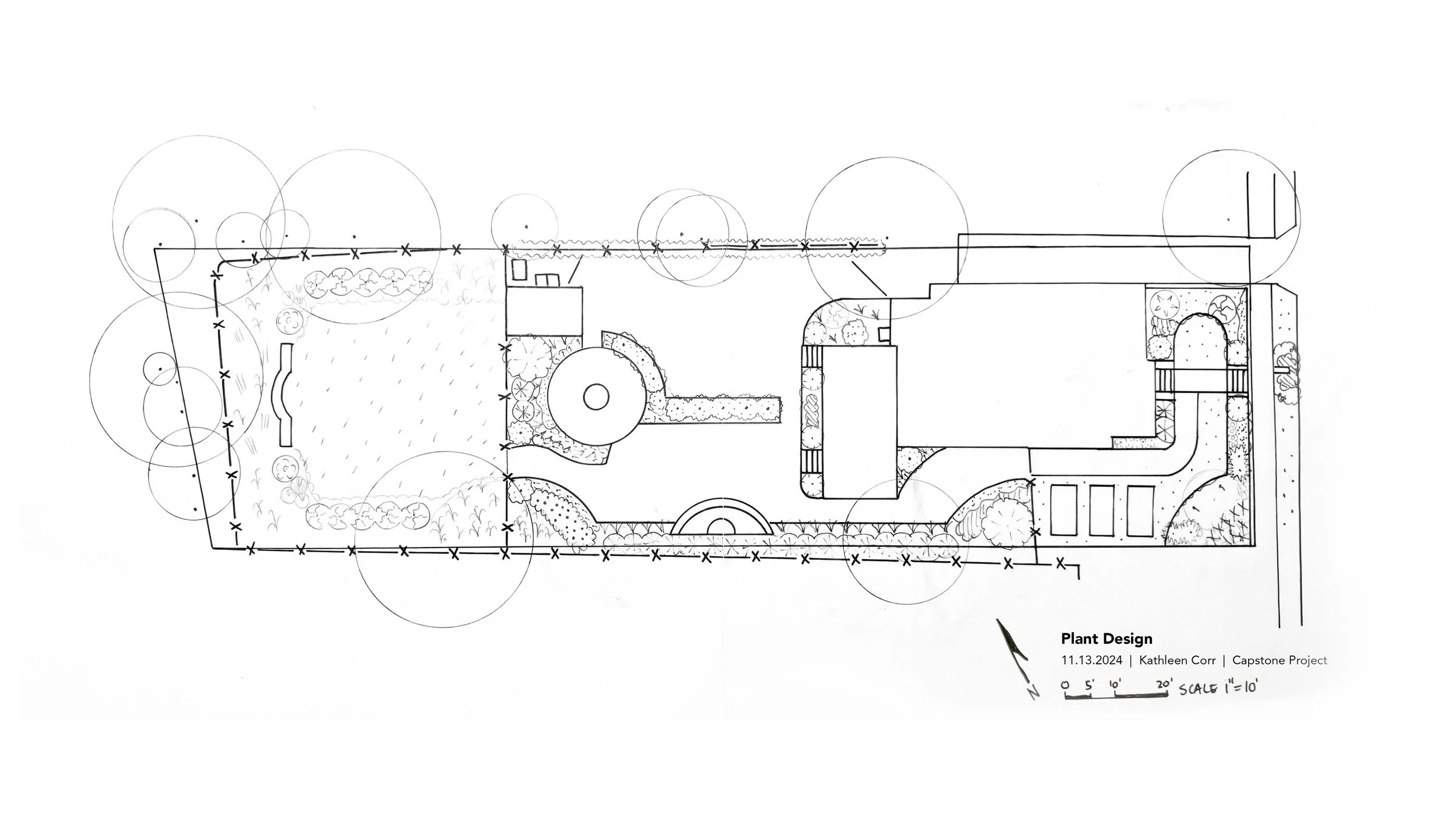
Plant Design
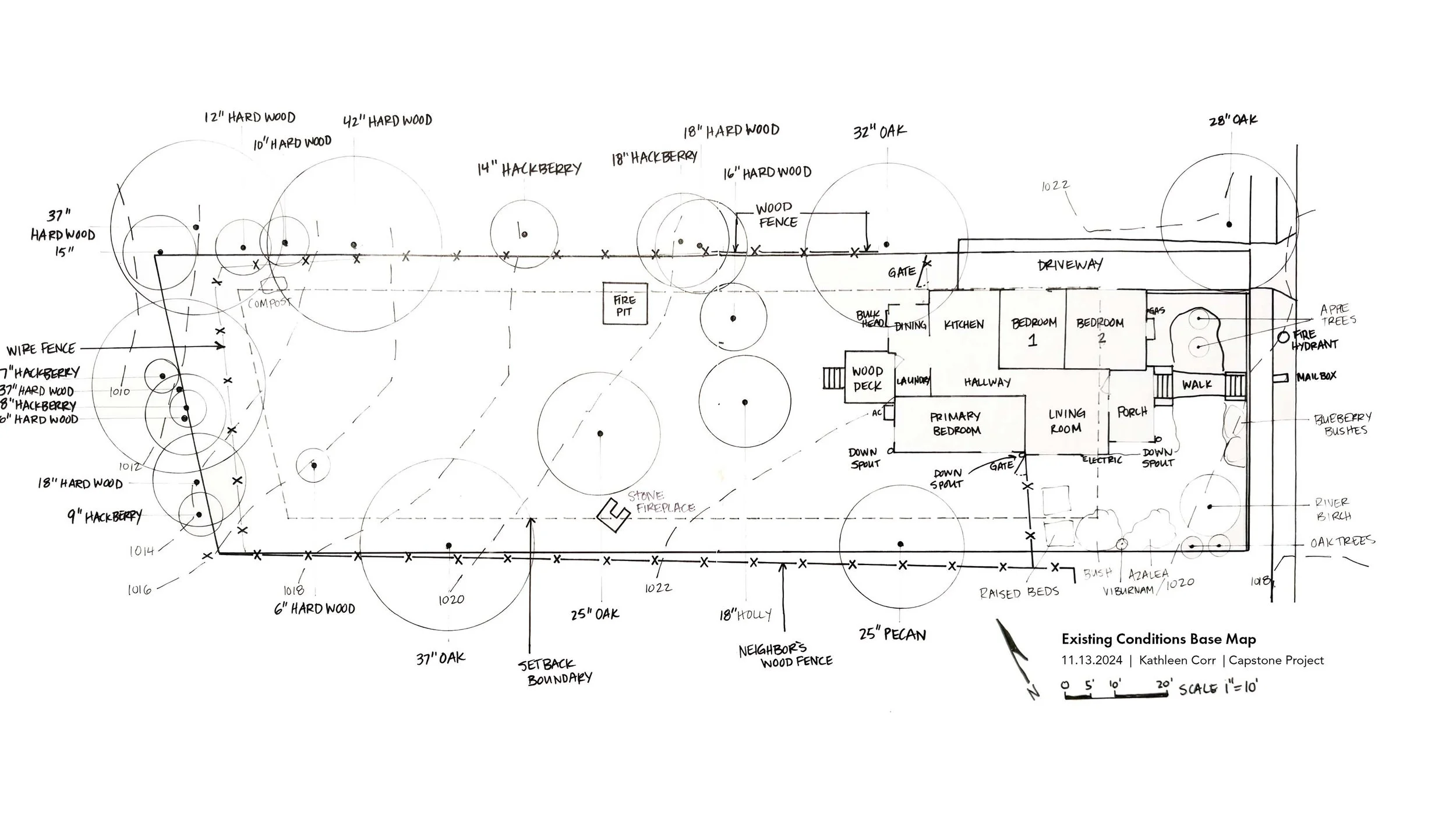
Existing Conditions Base Map